The Benefits of Play-Based Learning for Young Children
For decades, the debate between structured academic instruction and play-based learning has been a central topic in early childhood education. While the pressure to give children a head start through early academics is understandable, a growing body of research points to play-based learning as the most effective method for fostering holistic development in young children. This educational approach, which uses play as the primary medium for exploration and skill-building, is not merely a break from “real” learning but the very vehicle through which children build foundational academic and life skills.
What Is Play-Based Learning?
Play-based learning is an educational approach where children build knowledge and skills through hands-on experiences, exploration, and interaction rather than through rote instruction or formal worksheets. It’s important to distinguish this from simple “free time.” High-quality play-based learning is intentional; educators design environments and activities that harness children’s natural curiosity to meet specific developmental and learning goals.
This approach is grounded in the understanding that young children are not yet physiologically wired for abstract thinking. They learn best through concrete, sensory-rich, and real-world experiences. By encouraging children to explore, imagine, and interact, play-based learning nurtures cognitive growth, language development, social skills, and emotional well-being in ways that early academic instruction often cannot.
Why Play-Based Learning Is Essential for Early Childhood Development
Research consistently demonstrates that play-based learning fosters deeper, more meaningful learning than traditional didactic methods. When children engage in play, they explore concepts, take risks, make mistakes, and refine their understanding through trial and error—processes that significantly strengthen retention and comprehension. The benefits extend across all areas of a child’s development.
Cognitive Development: Building the Brain’s Foundation
Play is a powerful catalyst for cognitive development. Through activities like puzzles, sorting games, and building blocks, children sharpen their attention, strengthen their memory, and build critical problem-solving skills. For instance, block-building isn’t merely recreational; it introduces children to scientific concepts, spatial reasoning, and problem-solving strategies that underpin early STEM development. Play-based learning encourages children to think creatively and critically, forming the neural pathways necessary for future academic success.
When children engage in imaginative scenarios, they are also developing executive function skills. These include working memory, cognitive flexibility, and inhibitory control—all of which are strong predictors of academic achievement. A child pretending to run a restaurant, for example, must remember orders, adapt to new “customers,” and resist the urge to abandon their role—all while having fun.
Language and Communication Skills
Conversation, storytelling, and role-play provide rich opportunities for children to expand their vocabulary and practice self-expression. When children engage in dramatic play, such as acting out a scene in a pretend grocery store, they are practicing language in a meaningful context, building the confidence to communicate their thoughts and ideas.
During play, children naturally encounter situations that require them to articulate their needs, negotiate roles, and explain their reasoning. These interactions expose them to new vocabulary and sentence structures in a low-pressure environment. Research shows that children in play-based settings often demonstrate more advanced narrative skills and greater verbal fluency compared to peers in strictly academic programs.
Social and Emotional Growth
Play is a natural vehicle for developing crucial social and emotional skills. Group play teaches children to share, take turns, cooperate, and navigate social dynamics. It also plays a pivotal role in building emotional intelligence. As children play, they learn to recognize and manage their feelings, develop empathy, and build resilience when things don’t go their way. Play-based learning provides a safe space for children to practice negotiating, resolving conflicts, and building healthy relationships.
In a quality play-based environment, children also learn to handle disappointment and frustration. When a tower falls or a game doesn’t go as planned, they have the opportunity to practice emotional regulation with the support of caring adults. These experiences build the emotional resilience that serves children well throughout their lives.
Physical Development
Physical play, from running and climbing to drawing and building, is essential for healthy physical development. Active play strengthens gross motor skills, while activities that require fine motor control, such as manipulating small objects or using art supplies, refine dexterity and hand-eye coordination.
Outdoor play, in particular, offers unique benefits. Climbing structures, riding tricycles, and playing ball games all contribute to spatial awareness, balance, and overall physical fitness. Meanwhile, indoor activities like threading beads, cutting with scissors, and molding clay prepare children’s hands for writing and other fine motor tasks they will encounter in school.
Nurturing Positive Attitudes Toward Learning
Perhaps one of the most significant benefits of play-based learning is its ability to foster a lifelong love of learning. When children associate learning with joy and discovery, they become more engaged, motivated, and curious. This positive attitude is key to helping children develop into engaged and confident learners who are prepared for the challenges of formal schooling.
Children who experience learning as an exciting adventure rather than a series of tasks to be completed are more likely to take intellectual risks and persist through challenges. This intrinsic motivation is a powerful driver of academic success that cannot be replicated through external rewards or pressure.
Types of Play in a Play-Based Learning Environment
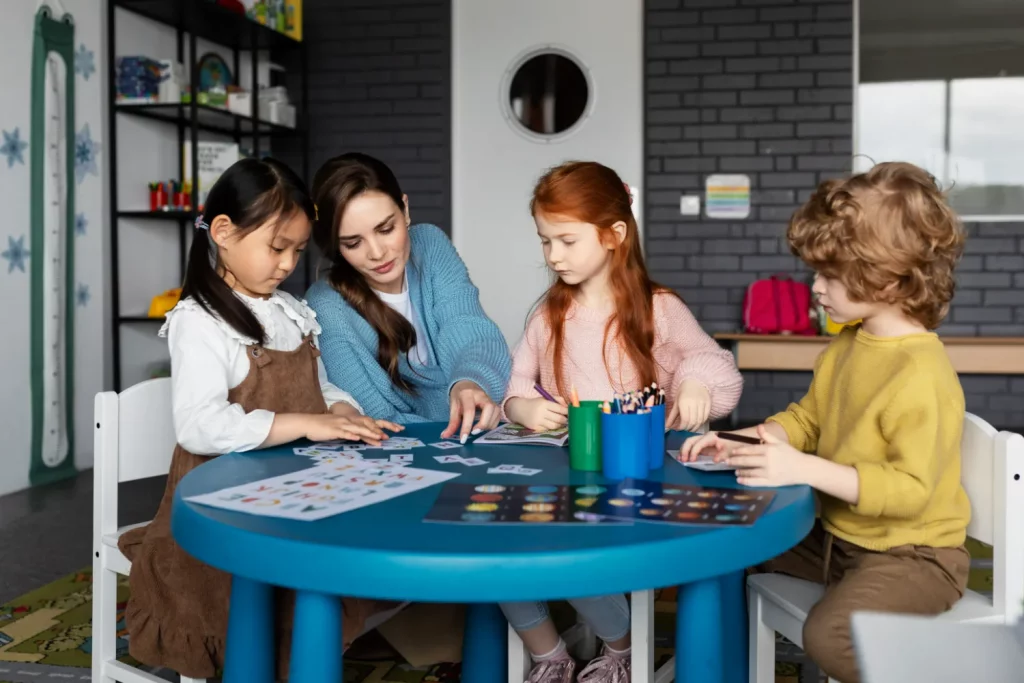
Effective play-based learning encompasses a variety of activities, each offering distinct developmental benefits. Understanding these different types can help parents and educators create rich, balanced play experiences.
Social Play
Social play happens with others and helps children practice communication, cooperation, empathy, and relationship-building skills. This includes everything from parallel play in toddlers to complex group games in preschoolers. Through social play, children learn to read social cues, take turns, and develop friendships.
Physical Play
Physical play involves movement and activity, supporting motor skills, coordination, and overall physical development. Running, jumping, climbing, and dancing all fall into this category. Physical play not only builds strong bodies but also helps children develop body awareness and spatial reasoning.
Dramatic Play
Dramatic play is imaginative role-playing where children act out scenarios, explore emotions, and experiment with real-world roles and situations. Whether pretending to be a doctor, a parent, or a astronaut, children process their understanding of the world and practice social scripts in a safe environment.
Investigative Play
Investigative play is centered on curiosity and discovery, involving children exploring, questioning, and experimenting to understand how things work. This might include examining leaves, mixing water and sand, or figuring out how a toy mechanism operates. Investigative play builds scientific thinking and problem-solving skills.
Sensory Play
Sensory play engages the senses through textures, sounds, sights, or movement, supporting cognitive and sensory processing. Activities like playing with water, sand, playdough, or finger paint help children make sense of their environment and develop important neural connections.
Mastery Play
Mastery play focuses on practicing and refining skills through repetition, challenge, and persistence, helping children gain confidence and competence. When a child repeatedly builds and rebuilds a block tower or practices zipping their jacket, they are engaging in mastery play that builds both skill and self-efficacy.
The Teacher’s Role in Play-Based Learning
Contrary to a common misconception, teachers are not passive observers in a play-based classroom. Their role is critical and highly active. They are the architects of the learning environment, designers of playful experiences, and skilled observers who can extend a child’s thinking in a meaningful way. This is often referred to as “guided play” or “scaffolded play,” where the teacher supports and challenges the child without taking control of the activity.
Effective teachers in play-based settings ask open-ended questions like, “What do you notice?” or “What might happen if…?” to deepen children’s thinking. They introduce new vocabulary during play, help children navigate social conflicts, and document learning to share with families. This intentional facilitation transforms simple play into powerful learning experiences.
To effectively implement this approach, especially in diverse urban settings, programs must prioritize professional development for their educators. This not only enhances the quality of learning for the children but also supports teacher confidence and retention, improving the stability and caliber of Child Care in Washington DC. Well-trained teachers are the backbone of high-quality play-based programs.
Play-Based Learning vs. Early Academics: The Research
The research is increasingly clear: play-based learning is not the opposite of rigor; it is the most effective path to it for young children. An over-emphasis on formal, teacher-directed academic instruction in the early years can be counterproductive, as it doesn’t align with how a child’s brain is wired to learn. The pressure of a “push-down” curriculum often doesn’t provide children with the foundational skills they need for successful school performance.
Instead, play-based learning builds essential executive function skills, such as self-regulation, persistence, and cognitive flexibility. For example, the early mathematical competencies developed through play are among the strongest predictors of later academic success. A study in South Africa even found that play-based learning can enhance the development of the vestibular system, which positively impacts cognitive abilities, including mathematical skills.
This approach is especially critical for children from vulnerable backgrounds, who may not have access to high-quality play experiences at home. When families are evaluating their options, many are turning to programs that can nurture this foundational growth through high-quality Washington DC Infant Care that prioritizes developmentally appropriate practices. These programs recognize that the earliest years are a critical window for brain development and that play is the most effective way to support that growth.
The Neuroscience Behind Play
Recent advances in neuroscience have provided compelling evidence for the benefits of play. When children play, their brains release dopamine, a neurotransmitter associated with pleasure and motivation. This positive emotional state enhances learning and memory consolidation. Play also stimulates the growth of neural connections, particularly in the prefrontal cortex, which is responsible for executive function.
Furthermore, play reduces stress in young children. Chronic stress and high cortisol levels can impair brain development and learning. Play provides a natural stress-relief mechanism, allowing children to process emotions and experiences in a supportive environment. This is why play-based programs often see children who are more relaxed, focused, and ready to learn.
Implementing Play-Based Learning at Home
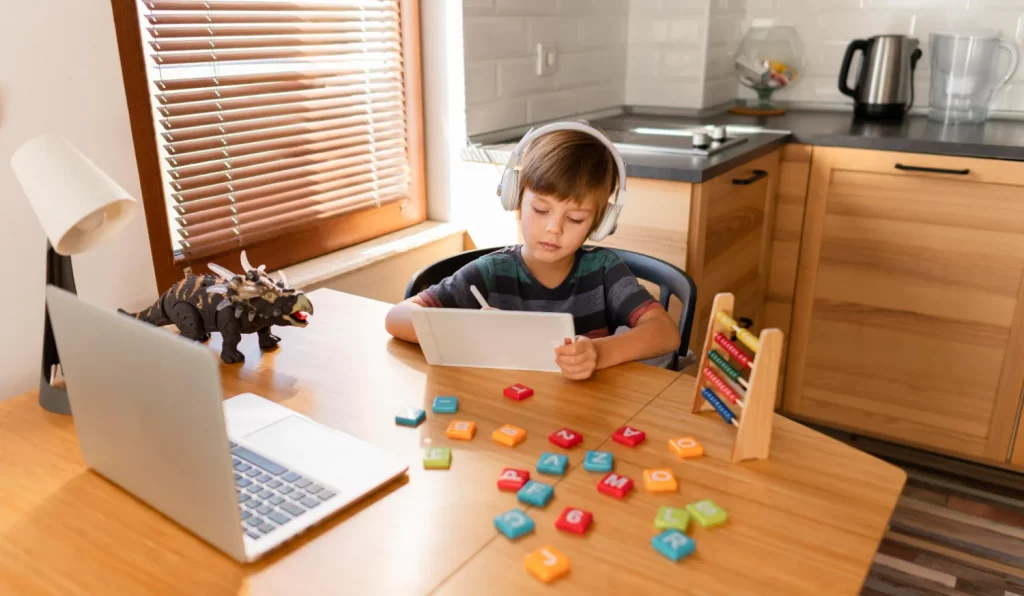
While formal programs provide excellent opportunities for play-based learning, parents can also support this approach at home. Creating a play-friendly environment doesn’t require expensive toys or elaborate setups. Simple, open-ended materials often provide the richest play experiences.
Start by providing blocks, art supplies, dress-up clothes, and household items like pots and pans. Allow for large blocks of unstructured time where children can follow their own interests. Limit screen time and prioritize active, hands-on play. Most importantly, join your child in play, following their lead and asking curious questions that extend their thinking.
Creating a Play-Friendly Environment
Consider setting up different play zones in your home. A building area with blocks and Legos, an art station with paper and crayons, a dramatic play corner with costumes and props, and a quiet reading nook all provide diverse opportunities for play. Rotate materials regularly to maintain interest and introduce new challenges.
Also consider incorporating nature into play. Outdoor play offers unique benefits, from physical activity to sensory exploration. Even a small balcony or backyard can become a rich play environment with pots for digging, water for splashing, and plants for observing.
Choosing a Play-Based Program: A Guide for Parents
For parents seeking a program that aligns with this child-centered philosophy, it’s helpful to know what to look for. Here are questions to ask when touring a school or child care center.
Key Questions to Ask
How is the daily schedule structured? Look for large, uninterrupted blocks of time for free play and exploration, rather than a schedule broken down into short, teacher-directed lessons. Children need extended periods to become deeply engaged in their play.
What is the teacher’s role during play? Ask how teachers observe and interact with children during play. They should be able to describe how they ask open-ended questions and extend children’s learning. Avoid programs where teachers are primarily focused on managing behavior or completing predetermined activities.
What types of materials are available? Look for open-ended materials like blocks, art supplies, dress-up clothes, sand, and water, rather than an over-reliance on worksheets and pre-planned crafts. Materials should be accessible to children and organized to encourage independent exploration.
How is learning assessed? In a play-based program, assessment is often done through observation, portfolios, and anecdotal notes, rather than formal tests. Ask to see examples of how teachers document and share children’s learning with families.
What is the outdoor play policy? Quality play-based programs prioritize outdoor time regardless of weather (within safe limits). Outdoor play offers unique developmental benefits that cannot be replicated indoors.
How are transitions handled? Look for programs where transitions between activities are smooth and unhurried, allowing children to complete their play without constant interruptions.
Addressing Common Concerns About Play-Based Learning
Despite the overwhelming evidence supporting play-based learning, some parents and educators worry that children won’t be prepared for the academic demands of kindergarten. These concerns are understandable but typically unfounded when we understand what “readiness” truly means.
What About Kindergarten Readiness?
Kindergarten readiness is not about knowing letters and numbers by a certain age. Instead, it’s about having the social, emotional, and cognitive skills to thrive in a classroom setting. Children who have developed self-regulation, curiosity, persistence, and social skills are far better prepared for kindergarten than those who can recite the alphabet but cannot sit still or work cooperatively.
Many kindergarten teachers report that children entering their classrooms are increasingly lacking in executive function skills, making it difficult for them to learn despite exposure to academic content. Play-based learning directly addresses this gap by building the foundational skills that make academic learning possible.
What About Children Who Need More Structure?
Play-based learning is not unstructured chaos. High-quality play-based programs are carefully designed with routines, clear expectations, and intentional teacher involvement. Children who thrive on predictability often find comfort in the consistent routines of a play-based classroom, even as they enjoy freedom within those structures.
For children with special needs or those who struggle with transitions, play-based learning offers particular benefits. The flexibility and individualization inherent in play-based approaches allow educators to meet children where they are and support their unique developmental trajectories.
Frequently Asked Questions
What is the difference between play and play-based learning?
Play is typically child-directed, joyful, and intrinsically motivated. Play-based learning adds the element of intention. Educators use play as a vehicle for learning by designing environments, observing children, and extending their thinking to support specific developmental and learning goals. In a play-based program, play is not just allowed; it is purposefully planned and facilitated to maximize learning.
Do children in play-based programs learn to read and do math?
Yes. Play-based learning builds the foundational skills necessary for reading and math, such as phonological awareness through songs and rhymes, number sense through counting and sorting, and comprehension through storytelling. It also fosters the love of learning and cognitive flexibility that are critical for later academic success. Children in play-based programs often develop stronger number sense and literacy foundations precisely because they learn these concepts in meaningful, engaging contexts.
How does play-based learning prepare children for kindergarten?
Play-based learning builds the “learning to learn” skills that are essential for kindergarten, including self-regulation, executive function, problem-solving, communication, persistence, and social skills. Children who have these skills are better prepared to thrive in a structured school environment. When children enter kindergarten with strong executive function skills, they are able to pay attention, follow directions, and persist through challenges—skills that are more predictive of academic success than early reading or math ability.
Is play-based learning appropriate for children with diverse learning needs?
Absolutely. Play-based learning is inherently flexible and can be adapted to meet the needs of all learners. By offering multiple types of play and allowing children to engage in ways that match their interests and strengths, it creates an inclusive environment where every child can participate and grow. Children with developmental delays, sensory processing challenges, or other special needs often thrive in play-based settings where they can learn at their own pace and in ways that work for them.
How can I support play-based learning at home?
You can support play-based learning by providing open-ended materials like blocks and art supplies, allowing for free, unstructured time, and engaging in play with your child by following their lead and asking curious questions. Also consider reading books about play and child development to deepen your understanding, and look for opportunities to connect with other families who value play-based approaches.